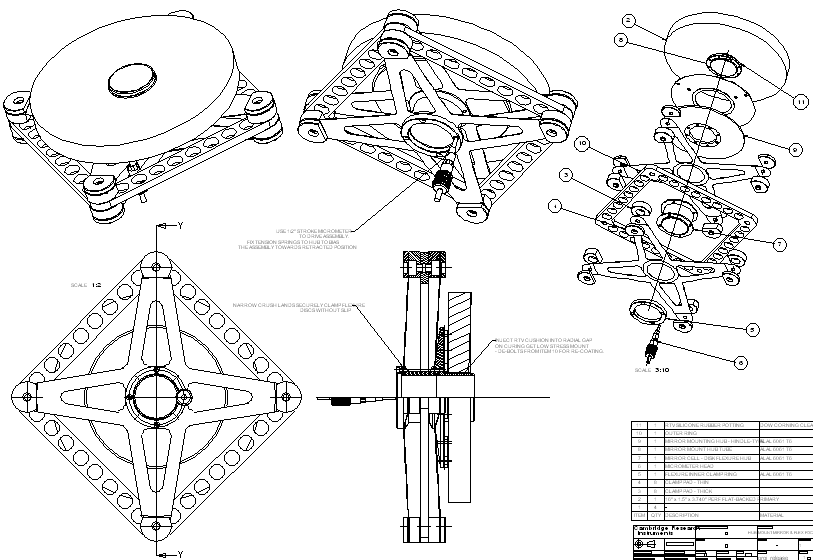
Tony Owens has provided this design for a main mirror focusing system, using compliant hinges in which the desired motion is axial/linear. It features a laminated six point support that is very low profile. This design may be better suited to Newtonian configurations more than Tony's previous (SCT) design. What follow below are overview and detail drawings, as well as comments from Tony.
Here is the overview drawing.
This is a side view. Note that the mirror is now in the shape
of a disk, in typical amateur fashion for a big Newtonian.
However, the mirror is perforated, which allows radial support
from an inner hub. The compliant focusing device is just behind
the main mirror, and is relatively narrow/low profile. 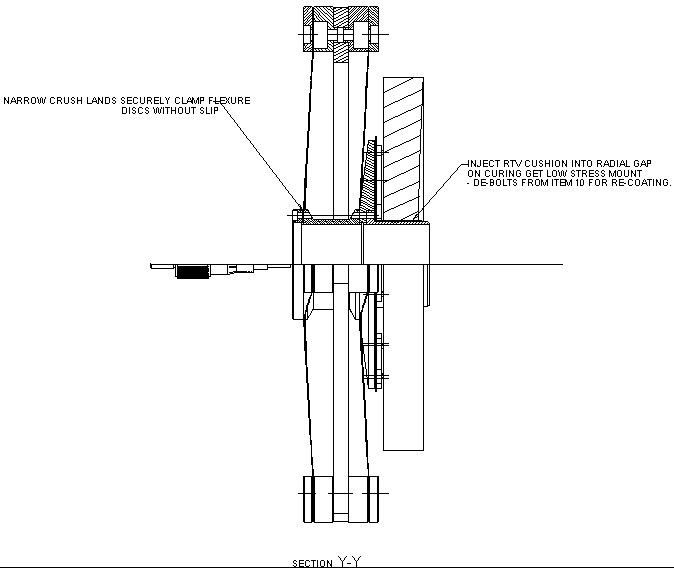
Here is a back view of the compliant focusing cell. It is
square shaped, which may be easier to adapt to amateur Newtonian
designs, especially truss tube arrangements. Note that the
flexible disks are now in a cross shape, and do not require a
continuous outer ring for clamping. This may make fabrication
requirements for the clamps a bit easier to achieve. Note that
the flexible disks are perforated to allow for
ventilation/cooling of the main mirror. 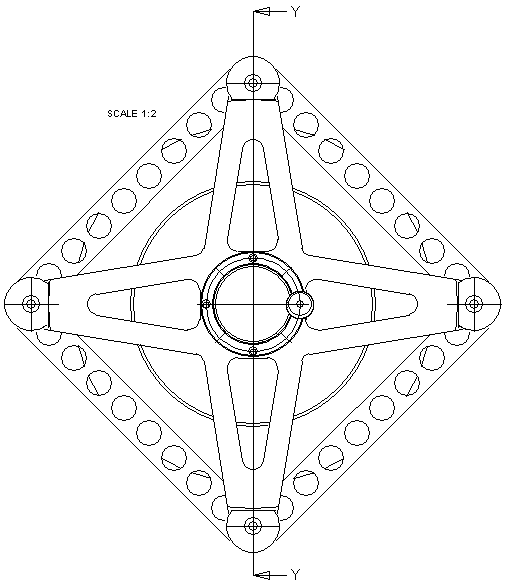
Here is a forward-oblique view of the mirror and compliant
focuser. 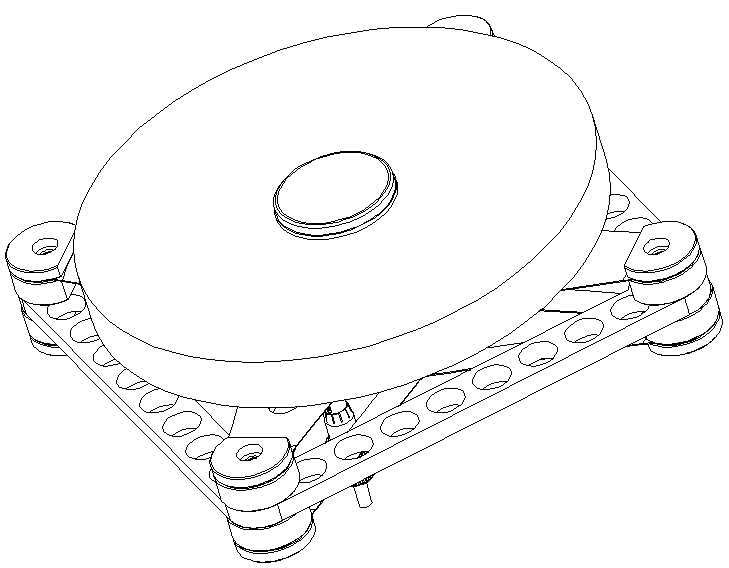
Here is a rear-oblique view of the compliant focuser. Two
compliant flexible disks (more cross-shaped than disk) are used.
In this example a micrometer is used to control axial motion of
the focuser. 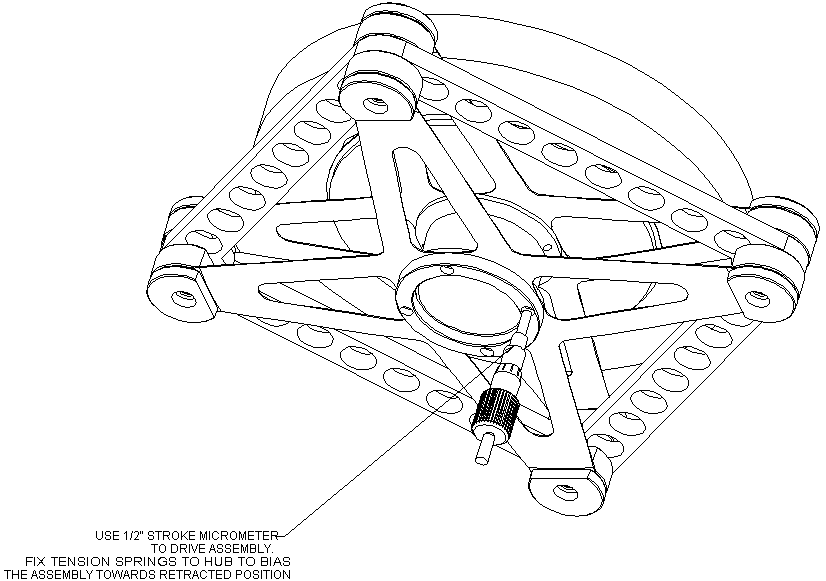
This tall drawing is an exploded view with part numbers.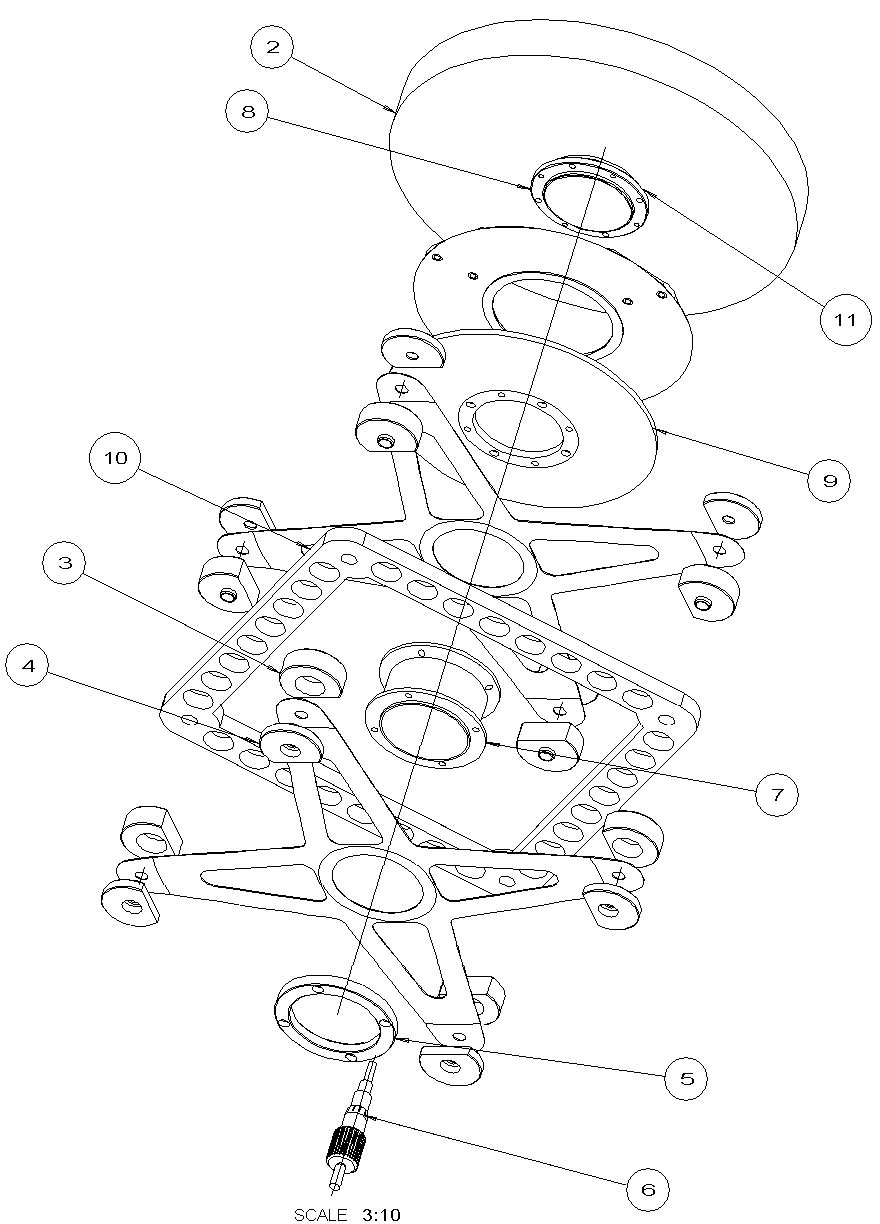
This is the parts list that corresponds to the above diagram.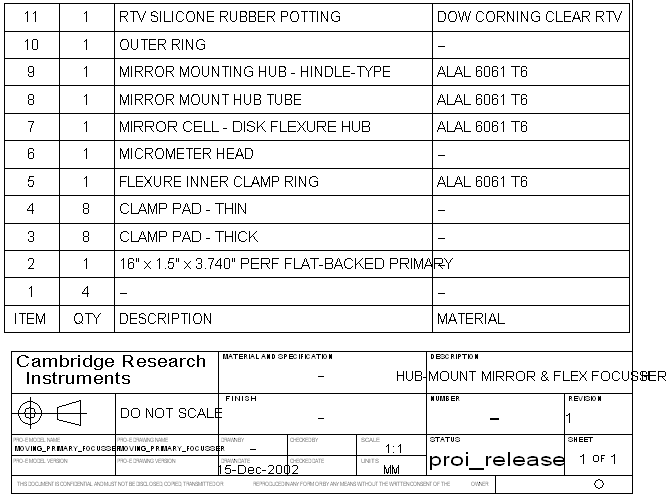
This design incorporates a very low profile, laminated six point support for axial support of the mirror. (An inner hub is used for radial support.) It is shown above, but not in detail. Below is a closer look.
Here is the overview of the laminated six point support.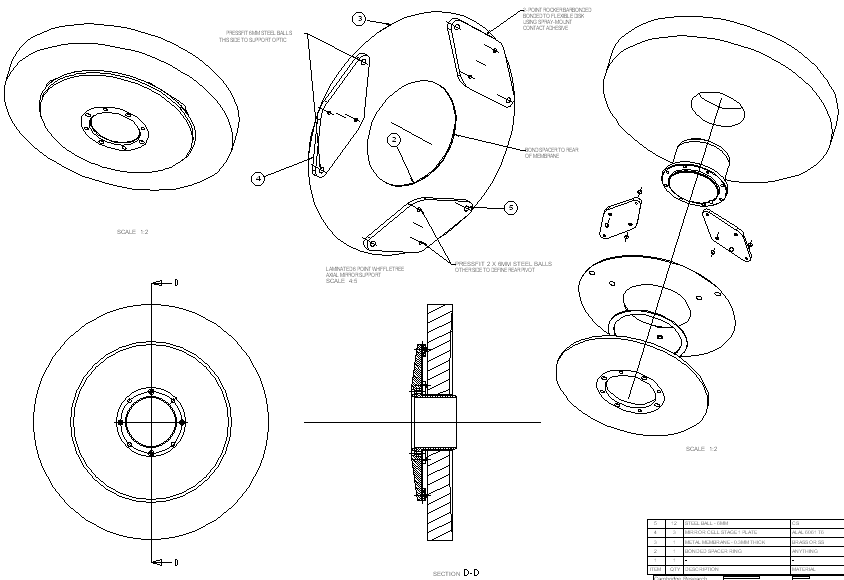
Side view of the six point support and mirror. 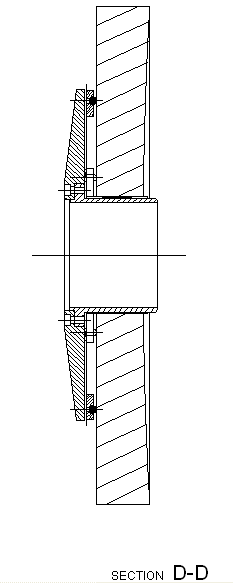
Rear view of laminated support and mirror. 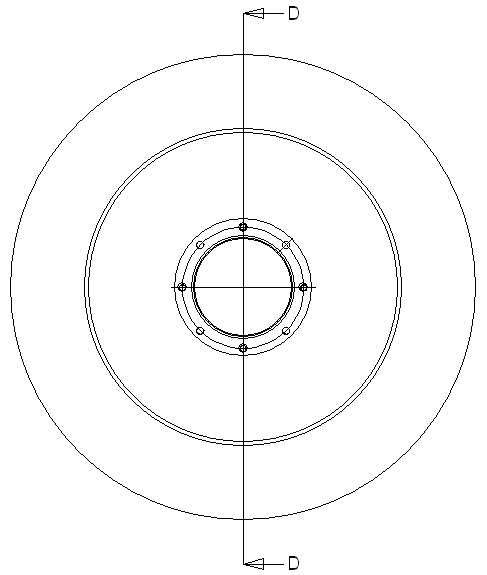
Rear oblique view of laminated support and mirror. 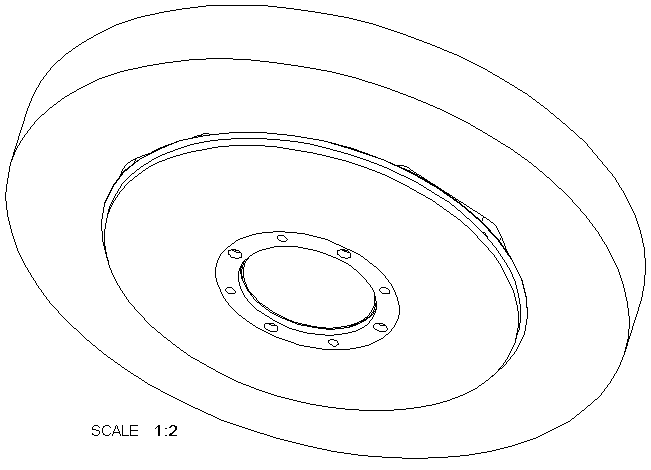
Detailed view of six point laminated support, with part
numbers.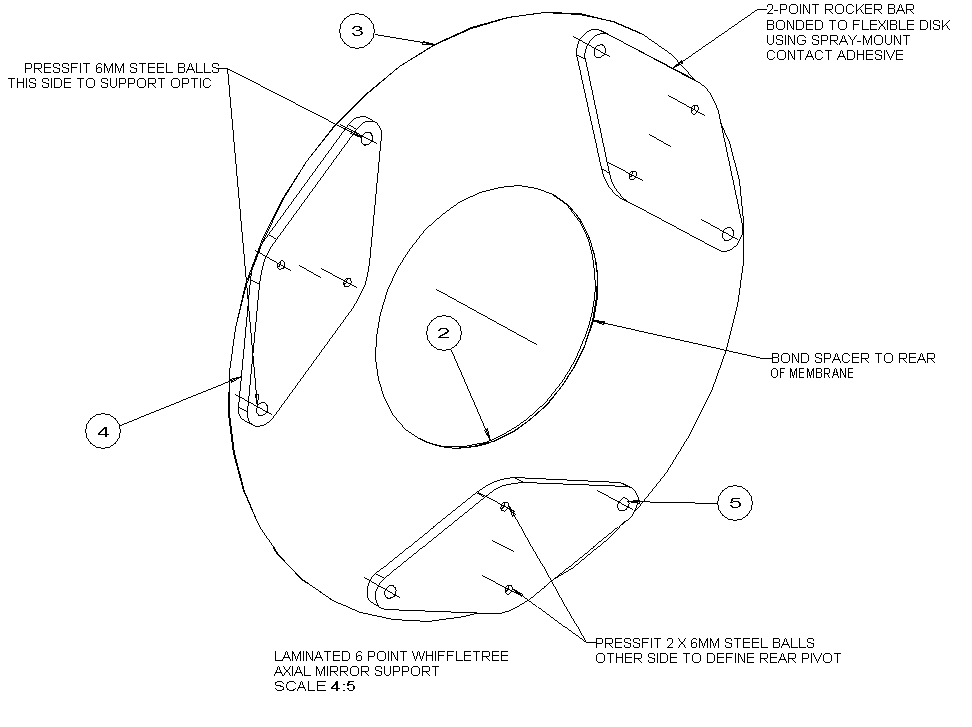
Exploded view of mirror and laminated six point support. 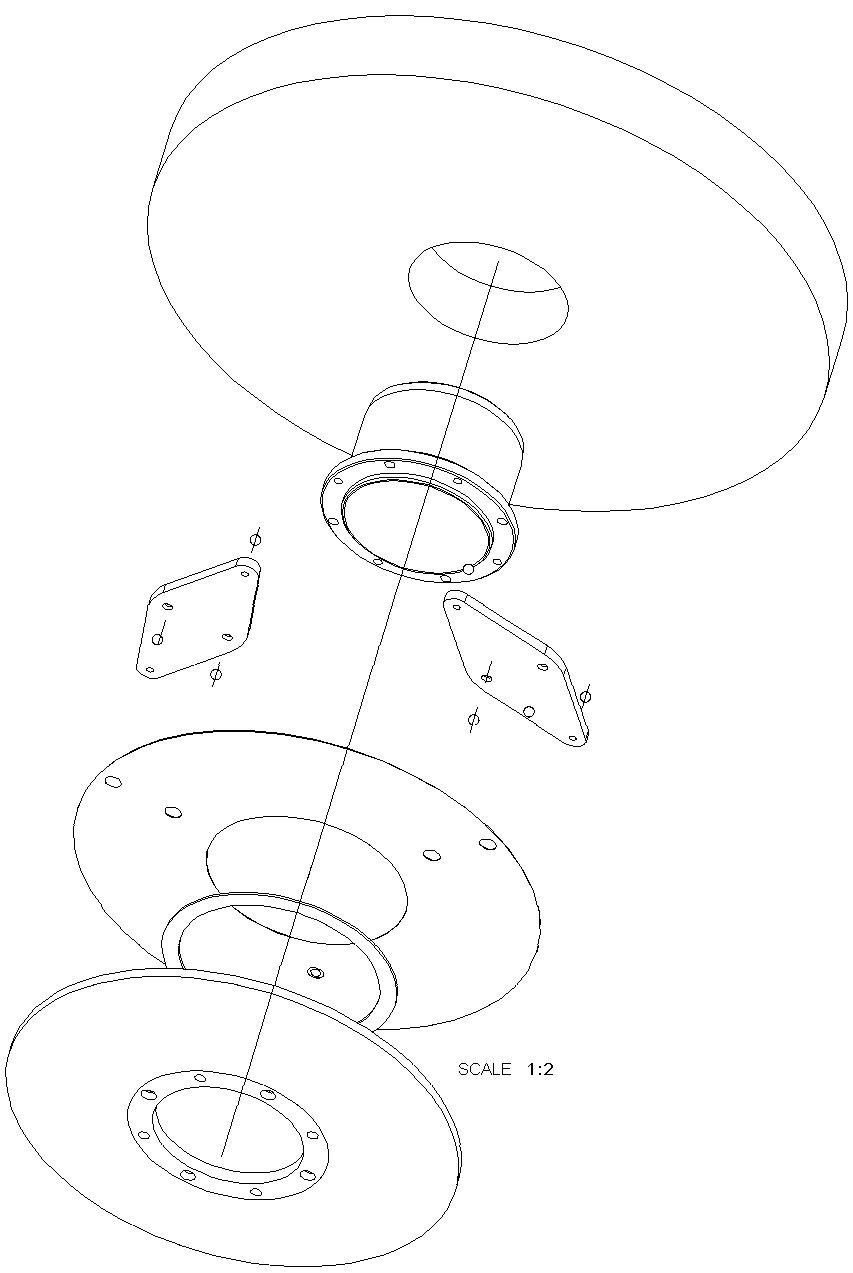
Part numbers and description. 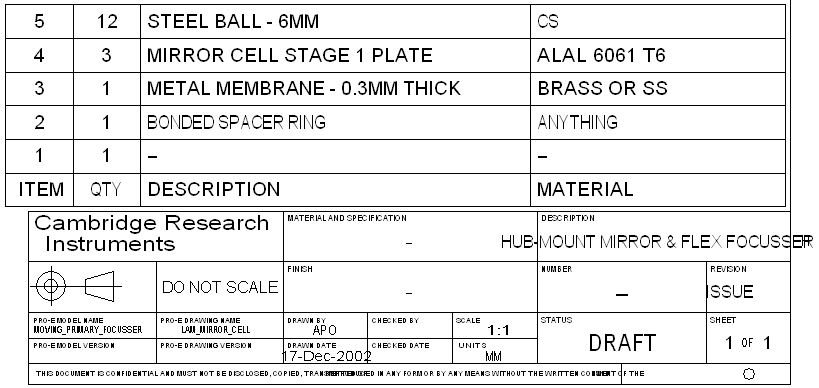
Comments from Tony:
The above drawings show a combination of a whiffletree mirror cell with twin disk flexure focussing. Note that I've changed from a disk to a cruciform profile flexure hinge. This probably isn't any easier to make than a disk with perforations, but mounting it at the OD is. This is because a big thick ring of hard material plus two other thinner ones for clamping, are replaced with a greater number of smaller, cheaper parts. The big square perimeter ring can even be birch plywood if required (needs to be thicker in section) without damaging the temperature stability of the design too much. I would suggest, if possible however, to use aluminium parts throughout, including the flexures, provided the thin sheet material is available in a good hard temper. (like T6)
Because I know of no better way of supporting the radial forces of amateur-sized mirrors than by means of a tube through a central perforation, I have accommodated my own bias and designed the cell with this! The six point rear support you suggested is provided by the laminated rear cell, which is PLOP-optimised for your mirror specs. Note the use of 4 simple steel balls and another disk flexure to get kinematic location of the 3 seesaw plates. The mirror just sits on six balls.
The upside of this radial support is that it is possible, with careful design and assembly, to reduce mirror shifting in its cell to very small displacement, as the scope moves around, and yet avoid introducing significant figure errors. I have never seen any other mount style used in amateur practice that can accomplish both these things better and more simply....
There is another way I favour for doing axial supports, which works as long as radial support is provided separately. The metal triangles used in your good 'ol Hindle-style whiffletree don't actually need a bearing and flexible strap to locate and orient them. They can be affixed to a thin sheet metal flexure, the size and shape of the optic, using spray-mount contact adhesive. So can the see-saw link bars used to connect pairs of triangles in 6 and 18 pt designs. A ball-bearing, pressed into a shallow hole on the back of each triangle, at it's centroid, plus three more on the front face near the vertices, allows the laminated assembly of triangles and flex disk to rest on whatever is behind. This could be another laminated assembly of link bars (18 pt design), or of 3 triangles (27 pt design) or a rigid metal plate (9pt design). All the layers can be clamped together at the perimeter or centre, to give a fully-floating, low friction, ultra-thin whiffletree that uses few or no fasteners.
Note that the triangle plates should not be made too thin, or they will deflect (differentially) unduly as the scope points closer to the zenith, and accuracy will be lost. 4 mm alloy plate is probably the minimum for up to 20" optics, then 6mm plate - a quick FEA would answer this question.
An eight-spoke disc flexure (arranged in 4 triangulated pairs) would most economically be done by sticking with an inner circular clamped hub arrangement similar to my diagram, but replacing the expensive-to-produce large diameter outer clamp rings with a much cheaper bolted or epoxy-bonded assembly of bits of 6061 plate forming a square, whose vertices correspond to the junction of the spoke pairs. This can then be fly-cut (or manually blanchard-ground) flat, both sides, and the discs clamped in place as before, using a large milled-out square flange of 6061 plate. (but cheap 12mm stuff, not 50mm tool plate) The discs themselves would now look like squares instead of circles, with the same hub region geometry as before, but all the circular and obround cutouts replaced by the spokes. A square frame should be provided all around the perimeter to stabilise the disc and help keep it flat during assembly.
All feedback is encouraged!
email: t-k-r-a-j-c-i-@-s-a-n-.-o-s-d-.-m-i-l (remove the dashes)
Last update: 22 Dec 2002