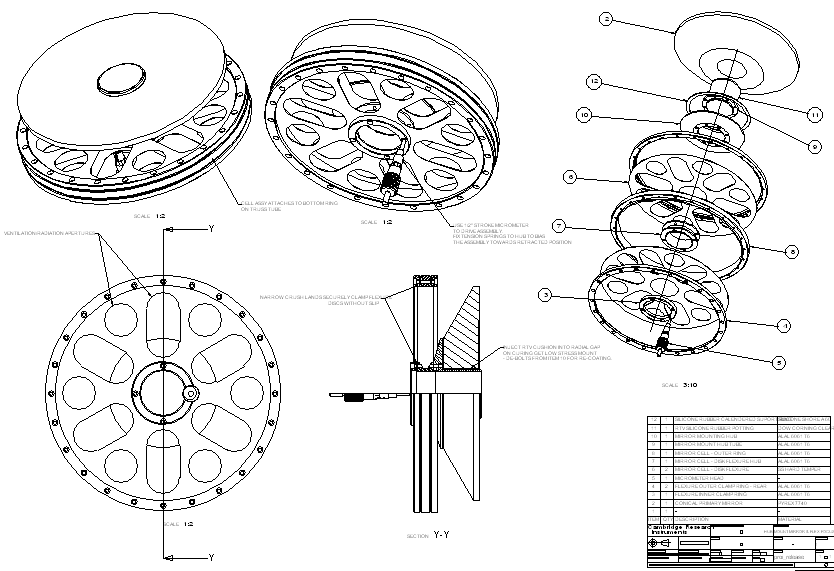
Tony Owens has provided this design for a main mirror focusing system, using compliant hinges (in the form of two flexible disks) in which the desired motion is linear/axial. What follow below are overview and detail drawings, as well as comments from Tony.
Here is the overview drawing.
This is a side view. Note that the mirror is in the shape of a
truncated cone, and if you've ever disassembled a commercial
Schmidt-Cassegrain, you've probably seen this mirror shape
before. The compliant focusing device is just behind the main
mirror, and is relatively narrow/low profile. 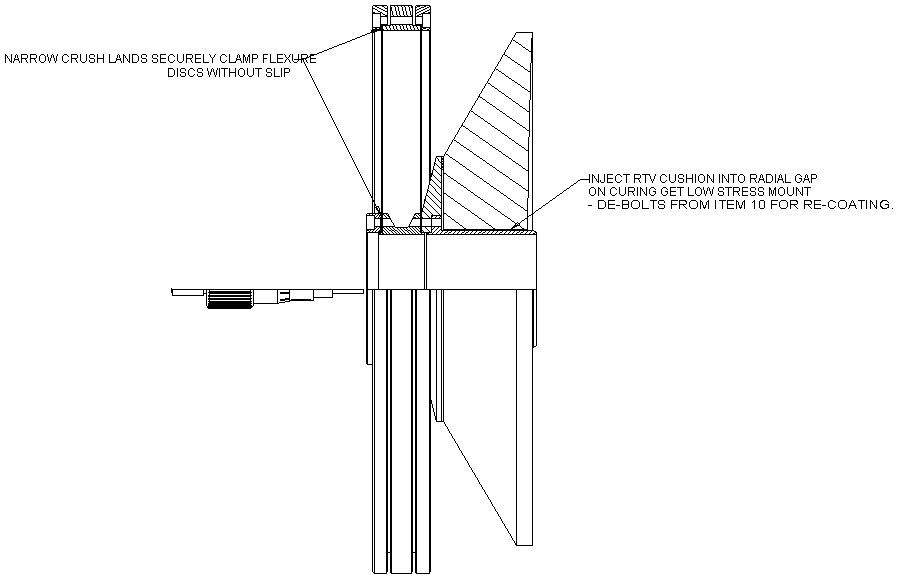
Here is a back view of the compliant focusing cell. Note that
the compliant flex-disk is perforated to allow for
ventilation/cooling of the main mirror. 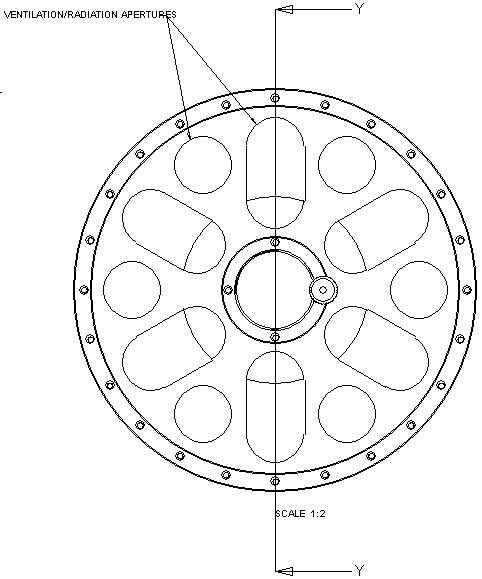
Here is a rear-oblique view of the compliant focuser. Two
compliant flex-disks are used. In this example a micrometer is
used to control axial motion of the focuser. 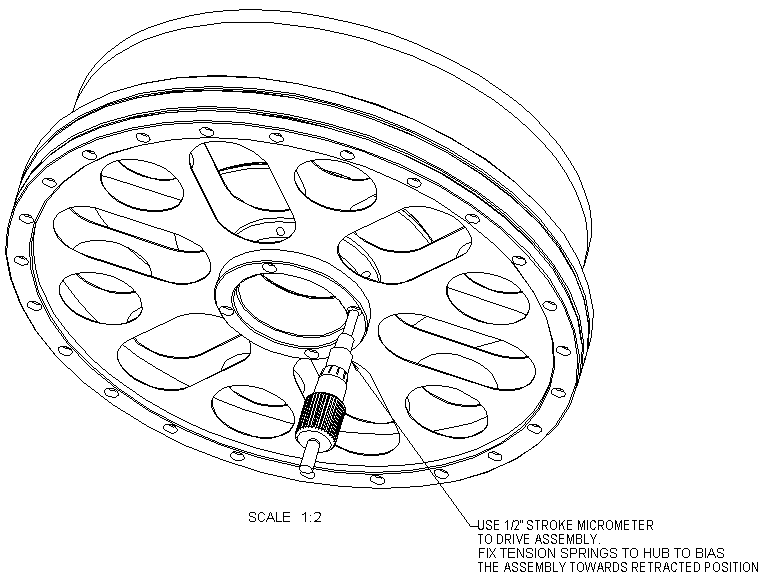
Here is a forward-oblique view of the mirror and compliant
focuser.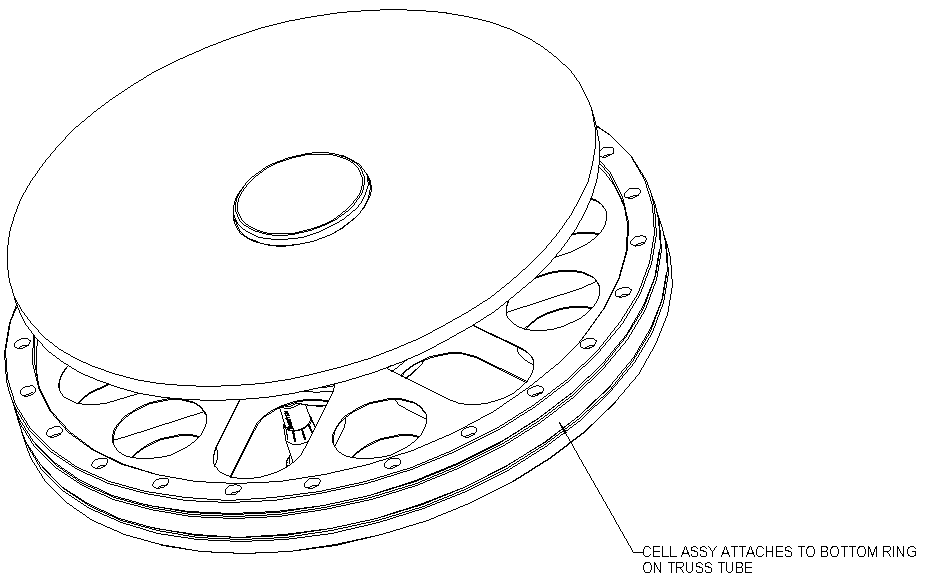
This tall drawing is an exploded view with part numbers.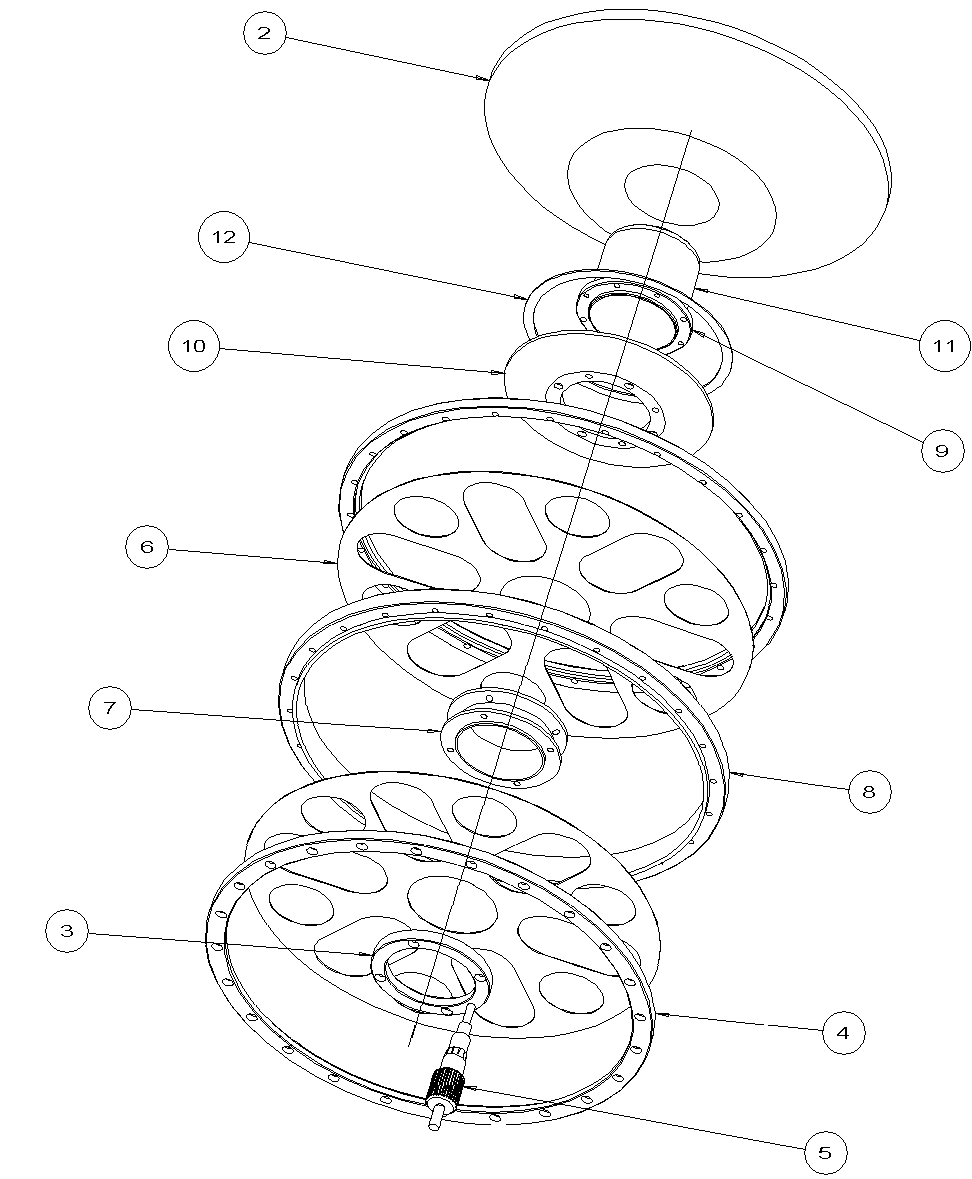
This is the parts list that corresponds to the above diagram.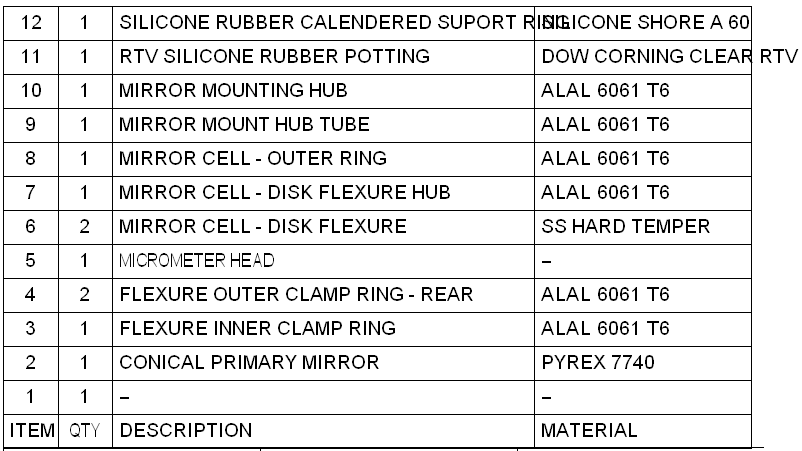
Here is an animation from Tony of the compliant cell as it moves from center/neutral to one end of its range of travel. Although it may only allow + or - 6 mm of travel in this example...with the Schmidt-Cass design...this can provide a wide range of focus adjustment, due to the multiplication effect of the secondary mirror. Also, if your scope is imaging-only, you do not need a very wide focus range to accommodate most of your needs.
Note that this design requires more advanced fabrication techniques. The flexible disks are cut from stainless steel sheet...preferably by a method such as laser cutting that does not put dimples, kinks, or other distortions in the disk. Such distortions would degrade the ability of this design to resist radial loads and moments.
I asked Tony if it was possible to use several stainless steel strips, oriented at different O'clock positions, instead of the harder-to fabricate perforated disk. Would behavior/performance of such a scheme suffer?
Tony's comments:
Theoretically, Tom, an individual spoked construction is just as good. The gotchas arise in doing a sufficiently accurate implementation. You'd get a result - but one a long way short of the potential stiffness obtainable.
The difficulty is in clamping six or eight strips in each disc such that the hub is accurately centered and the strips free of any slack. Then repeating this for the other disk. It probably means a good deal of thought and experimentation, plus multiple individual clamps.
There is no reason, however, not to implement spokes in an *integral disc*. The laser-cut process isn't actually that expensive, these days. Especially if a few others were interested in taking some of the discs thus cut.
All feedback is encouraged!
email: t-k-r-a-j-c-i-@-s-a-n-.-o-s-d-.-m-i-l (remove the dashes)
Last update: 22 Dec 2002